Motion Graphics for Music Videos: How animation, visualizers, and lyric videos build identity and storytelling
Motion graphics for music videos are among the most compelling tools for transforming a song into a recognizable visual universe. They do more than just accompany a track: they can build a narrative world, strengthen the artist’s identity, interpret the song's rhythm, and amplify its tone.
Various products coexist within this field. There are entirely animated music videos, hybrid sequences combining live-action with animation, visualizers (visual accompaniment videos), lyric videos (videos based on the song's lyrics), and short-form content designed for social platforms. Each format has different goals, but all work on the same relationship: transforming sound, words, and atmosphere into moving images.
In contemporary music projects, the moving image has become a vital part of a song's lifecycle. An animated video, visualizer, or lyric video doesn’t just "give people something to watch": they help build recognizability, tone, and visual continuity. For this reason, animation can be a highly effective tool even when a project doesn’t require a complex music video, but rather more essential content designed to accompany the listening experience and reinforce the artist's brand.
Animation and Music: Why they work together
The music video is a short, intense format deeply linked to visual memory. Within minutes, it must establish a tone, a direction, and often an artistic identity. Animation works effectively precisely because it allows a vast amount of information to be condensed into a fast, flexible, and highly expressive language.
It can serve to:
- Translate the song's rhythm into movement;
- Give visual form to imagery, metaphors, or emotional states;
- Build a world impossible to achieve through live-action alone;
- Strengthen the identity of the artist or the specific track;
- Create more recognizable content, even in short clips for social and digital platforms.
Compared to a fully live-action video, animation allows for greater freedom. it can distort bodies, spaces, objects, and perspectives. It can shift from figurative to abstract, from narrative to symbolic, and from comedic to eerie. This elasticity makes it particularly suited to music, where meaning is often conveyed through emotional climate rather than just a plot.
Visualizers and Lyric Videos: Lighter but essential formats
Alongside traditional music videos, visualizers and lyric videos have become significant tools in music communication in recent years. While often simpler than a full music video, they can still build identity, continuity, and recognizability.
A visualizer can accompany a track with looping animations, moving illustrations, textures, characters, abstract environments, or micro-narratives. A lyric video, on the other hand, focuses primarily on the text: words, typographic rhythm, the appearance of phrases, visual accents, and the relationship between voice and image.
These formats are useful because:
- They can be released quickly alongside the track;
- They reinforce the visual presence of the single;
- They offer material suitable for YouTube, Spotify Canvas, and social media;
- They allow for the construction of an imagery even with smaller budgets;
- They can act as teasers for or accompany an official music video.
They should not be considered "minor" products. Even an essential solution can work well if it has a clear visual direction. A lyric video with strong typography, or a visualizer with a coherent animated language, can make a track more recognizable and easier to remember.
From the Track to the Visual Universe
A successful motion graphics project for music videos doesn’t start with effects, but with listening. Before deciding on style, technique, or movement, one must understand what kind of visual world can emerge from the song.
The decisive questions are usually:
- What is the tone of the track?
- What is the relationship between lyrics and music?
- What imagery is already associated with the artist?
- Does the project require a music video, a visualizer, or a lyric video?
- How much should the video narrate versus evoke?
This step is crucial because the risk in animated music products is building strong images that are disconnected from the song. A video can be technically polished and still fail if it doesn't reflect the song's personality.
The goal is not to illustrate every word of the text. It is to find a visual key that makes the track more recognizable, more memorable, and more consistent with its universe.
Rhythm, Editing, and Movement
Motion graphics in music videos, visualizers, and lyric videos live within the time of the music. Every transition, scene change, typographic entry, or visual pause must account for the song's rhythm. Therefore, movement cannot be designed as a simple set of independent effects.
Many elements must be controlled:
- Transition speed;
- The relationship between movement and the musical beat;
- The alternation between "full" and "empty" spaces;
- The balance between narrative and abstract moments;
- Consistency between editing, animation, and the track’s tone.
In an interview published by It’s Nice That, Jason Galea recounts the process of the music video Robot Stop for King Gizzard and the Lizard Wizard, starting from hand-drawn concepts, developed into an animated storyboard, 3D models, and compositing. This interview shows how much an animated video requires progressive construction, where idea, rhythm, and technique must advance together.
Visual Identity and Artist Recognizability
A music video, visualizer, or lyric video does not exist as a standalone piece of content. It enters the artist's visual system: covers, photographs, social media content, live graphics, promotional materials, and digital communication. For this reason, animation can become a vital part of musical identity.
An effective project manages to:
- Make the single more recognizable;
- Provide continuity to the artist’s imagery;
- Build a visual tone consistent with the genre and audience;
- Generate easily adaptable materials;
- Distinguish the track within a crowded visual environment.
The point is not to create a "beautiful" style in the abstract, but a suitable style. An ironic, melancholic, dark, or surreal track needs different movements, colors, shapes, and timing. When these choices are coherent, the animated content becomes more than an accompaniment: it becomes an extension of the musical project.
A Concrete Example: The video for “Fratellì” by Carl Brave
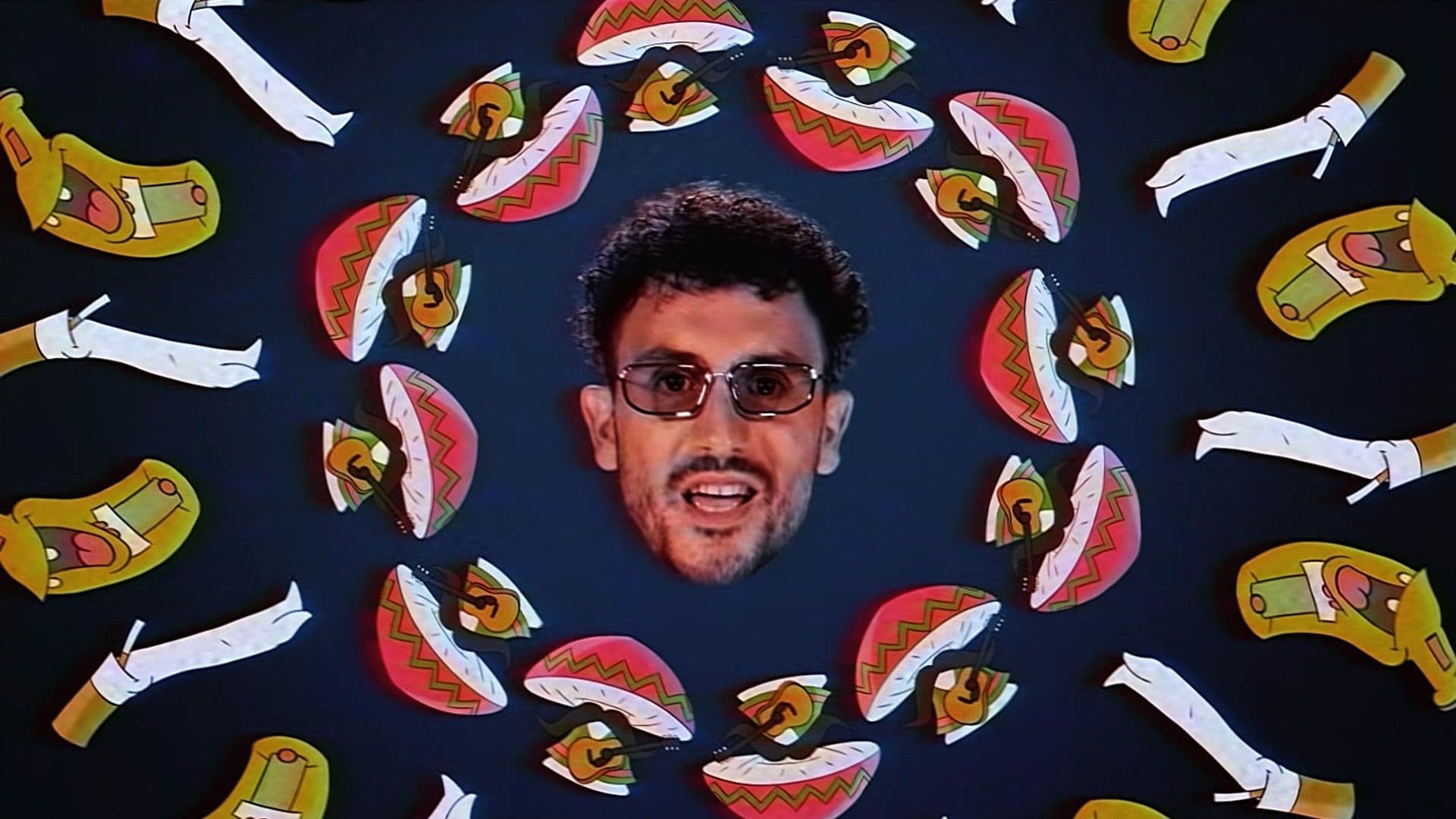
An example from the Studio Polpo portfolio is the music video for Carl Brave’s Fratellì. In this case, animation is not used as a mere decorative element, but as a fundamental language to build a specific tone, suspended between irony, distortion, and visual storytelling.
Videoclip Italia describes Fratellì as a video that combines live action and animation, noting an animated style reminiscent of Disney classics and Carosello cartoons.
This type of project perfectly illustrates a central aspect of music video animation: drawing in motion can give the track a specific "visual temperature." It doesn't just "illustrate" a scene; it builds an interpretive key, making the video’s tone more recognizable and the relationship between music, image, and artistic direction stronger.
Technique and Style Must Be Born Together
In the field of music videos, technique should not be chosen based on trends or effects. 2D animation, collage, stop motion, vector graphics, animated illustration, 3D, animated lettering, or integration with live action can all work very well, but only if they are consistent with the track.
The technical choice affects:
- The overall tone of the video;
- The perception of the artist;
- Production times;
- The level of detail possible;
- The relationship between animated images and music;
- The adaptability of the material to different formats.
Creative Boom, discussing the video "Out Of" by Claptrap, describes a project that mixes painting, drawing, paper cutouts, and lettering, balancing between art and graphic design: an example that shows how a music video can be born from the meeting of manual, graphic, and animated languages without being reduced to a single dominant technique.
When an Animated Project is the Right Choice
Not every song needs the same type of content. In some cases, a narrative music video is needed; in others, a well-constructed visualizer is enough. In still others, a lyric video may be the most effective choice to give power to the text.
Animation is particularly useful when:
- The track has a highly visual or surreal imagery;
- The lyrics suggest images that would be difficult to film in real life;
- The artist wants to build a more characterized and recognizable identity;
- A lighter but still polished format is required;
- The project needs to live across multiple platforms and different crops.
Regardless of the reasons for choosing an animated solution, the choice of format should not be automatic. Sometimes a full music video is necessary. Other times, a visualizer or lyric video can communicate better, with more precision and less dispersion. Studio Polpo can help you understand which type of animated content is best suited to the track, the budget, and the artist’s imagery.
The Most Frequent Mistakes
Many animated music videos, visualizers, and lyric videos fall flat not due to a lack of technical quality, but because they fail to find a clear relationship with the music. Animation can be polished, but if it doesn't dialogue with the track, the artist, and the editing, it risks remaining detached.
The most frequent mistakes are:
- Choosing a visual style before understanding the song's tone;
- Filling the video with effects without a clear direction;
- Animating everything at the same rhythm, without pauses or variations;
- Illustrating the lyrics too literally;
- Neglecting consistency with the artist's imagery;
- Thinking only about the full video and not the short-form distribution clips.
The goal is not to make the video more complex, but more focused. A simple project can work very well if the rhythm, style, and storytelling are aligned.
Conclusion
Motion graphics for music videos are effective when they transform a song into a coherent visual experience. Animation, illustration, moving text, visualizers, and lyric videos can give a track a stronger identity, helping the audience remember and recognize it.
Animated content shouldn't just amaze; it must build a precise relationship between sound and image, between artist and audience, and between rhythm and narrative.
If you want to develop a music video, visualizer, or lyric video for a musical project, Studio Polpo can help you build an animated direction that is more recognizable, coherent, and suited to the tone of your track.
FAQ
Is motion graphics for music videos only for entirely animated videos?
No. It can also work in combination with live-action footage, animated text, illustrations, graphic effects, visual inserts, or hybrid sequences.
What is the difference between an animated music video, a visualizer, and a lyric video?
An animated music video creates a more comprehensive visual experience, often narrative or highly stylized. A visualizer accompanies the track with more essential moving images. A lyric video focuses on the song’s text, working on rhythm, typography, and readability.
Can a visualizer replace an official music video?
It depends on the goals. In some cases, it can be a highly effective standalone piece of content, especially for releasing a track quickly or building visual continuity. In other cases, it works better as a support to the official music video, for promotion, or for social media content.