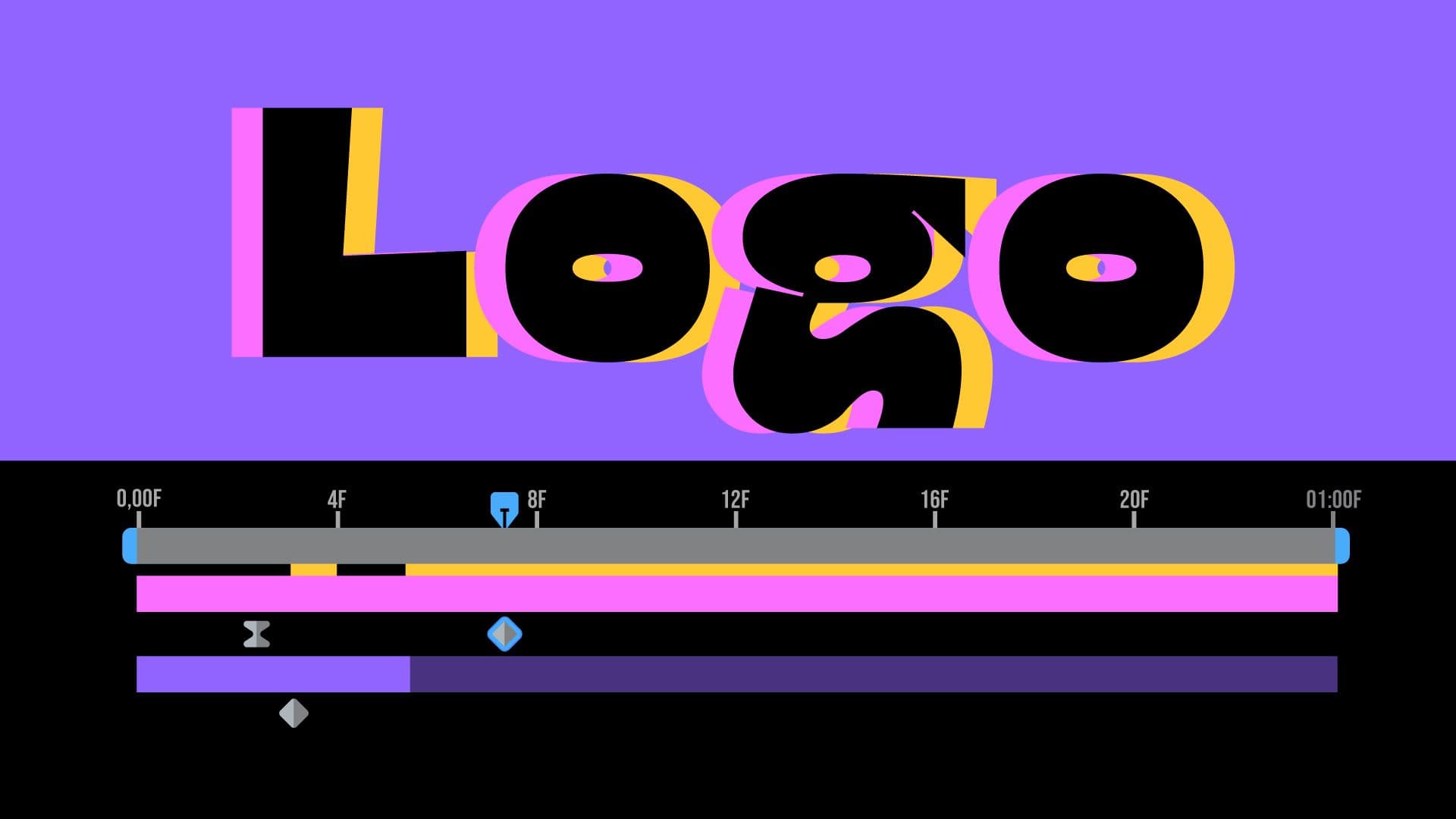
Logo animation: when it makes sense to animate a brand and how to do it without losing identity
Logo animation is often treated as a final detail: a small effect to add to the mark to make it look more modern or dynamic. In reality, when designed well, logo animation can do much more. It can strengthen the brand personality, suggest a behavior, add rhythm to a visual system, and make the brand more suitable for digital contexts where movement is now part of daily language.
Reflections published by Creative Boom on motion branding explain well why this topic has grown so much: brands increasingly live on screens, videos, socials, interfaces, and environments where movement is no longer an exception. And recent cases also reported by Creative Boom show how logo animation can enter a broader system without being reduced to a decorative signature.
For this reason, animating a brand makes sense only when the movement helps the brand express itself better, not when it only serves to look updated.
When it really makes sense
Not all brands need to be animated in the same way, and not all contexts justify a logo animation. The point is not to introduce movement at all costs. The point is to understand if the brand lives in environments where movement can reinforce identity, clarity, and recognizability.
Logo animation becomes truly useful when:
- the brand lives extensively on screens and video content;
- there is a motion system already present or to be built;
- the mark needs to appear in openings, endings, teasers, or social content;
- the movement can tell a real characteristic of the brand;
- it is necessary to make the brand more recognizable in the quick moments of opening, closing, or transitioning content.
In these cases, logo animation doesn't just add energy. It adds continuity between the mark and the overall behavior of the identity.
What makes a logo animation effective
A good brand animation doesn't necessarily have to be complex. It must be consistent and must feel like a natural extension of the brand, not an external graphic applied on top. It is this consistency that makes the difference between a useful gesture and an effect that ages quickly.
The most effective logo animations usually share common qualities: they start from the brand structure and do not betray it, they use time in a measured way, they maintain legibility and recognizability in every frame, and they coexist well with a broader motion branding system.
A case told by Creative Boom is interesting precisely for this reason: the animation is not an embellishment, but a narrative extension of the brand that adds a quality that the static version, on its own, could not have expressed with the same immediacy.
How to do it without losing identity
The greatest risk of logo animation is that the movement ends up altering the brand too much. This happens when surprise is emphasized and the structure is weakened, or when the rhythm of the animation has no relationship with the brand's tone. A brand can become more alive in movement, but it must not become another brand.
To avoid this problem, it is advisable to start from some very simple questions: is the brand more essential or expressive? More precise or more energetic? More institutional or more playful? The animation must reinforce these qualities, not contradict them.
In practice, to avoid losing identity, it is worth working on consistency between animation and brand tone, simplicity of the gesture avoiding overly spectacular solutions, brand hold even in small formats, and integration with the rest of the visual system.
If you are thinking of animating a brand, the point is not to find a catchy effect, but to understand what type of movement can truly become part of your identity. Studio Polpo can help you design a logo animation that strengthens the brand instead of overloading it.
The most frequent mistakes
Many mistakes arise from the fact that logo animation is treated as a technical test and not as a brand choice. In that case, the movement may even be striking, but it hardly builds continuity and value.
The most common mistakes are over-animating the mark and compromising its legibility, using a rhythm not consistent with the brand's personality, designing an animation that works only in large format, and not thinking about how the logo animation lives together with other assets.
The problem is not the movement itself. It is movement without a logic of identity.
Why it matters more today
Today logo animation matters more because the brand no longer lives only in static letterheads or printed media. It lives within short videos, interfaces, intros, events, reels, presentations, loading screens, and branded content. This doesn't force everyone to use movement, but it makes it much more useful to think about it when the brand has a strong digital presence.
When designed well, logo animation can make the beginning or end of a piece of content more distinctive, increase brand recognizability, add a behavioral trait to the visual system, and strengthen consistency between the brand and motion design.
In this sense, animating a brand has value when it helps the brand to be more itself, not when it disguises it as something momentarily trendier.
If you want to give your brand a more vivid presence more suitable for digital contexts, this is the right time to understand if logo animation can become a consistent part of your brand system. Studio Polpo works on static and moving identities with the same attention: making sure that the brand remains recognizable even when it starts moving.
FAQ
Should every brand have a logo animation?
No. It makes sense when the brand truly lives in contexts where movement matters and when the animation adds something consistent.
Does logo animation replace the static logo?
No. It completes it. The static logo remains fundamental, while the animation extends its use in some contexts.
Is a simple or spectacular animation better?
Almost always a simple but consistent solution is better. The spectacular effect ages more easily if it is not born from the brand.