How an art direction studio works: process, key roles, and expected results
When a company seeks art direction support, it often already knows that the problem concerns consistency, but it doesn't always imagine how the work unfolds. This creates two risks: expecting only a series of aesthetic proposals, or expecting a perfect system without dedicating the right amount of time to briefs, analysis, and testing.
In reality, an art direction studio works like a director. It listens, translates, organizes, and makes a vision applicable. The result is not just a mood board, but a framework of rules and choices that helps the project function better over time.
The initial phase: understanding the context
This phase is often underestimated, but it is the one that determines the quality of the project. Without a correct reading of the context, there is a risk of building a visual direction that is formally interesting but not very useful regarding real objectives, audiences, timelines, and channels. A good process starts right here: by understanding what needs to happen, not just how it should look.
Every serious job starts with the context. Before talking about images, it is necessary to understand objectives, audience, positioning, channels, constraints, existing materials, and the brand's level of maturity.
- What are the most important touchpoints?
- What needs to change in the perception of the project?
- Which assets already exist and which ones are missing?
- Is the problem strategic, visual, or operational?
Adobe’s insights on the creative brief are useful for this very reason: without a clear framework, even the best visual work risks remaining disconnected from real objectives.
Research: references, benchmarks, and materials
After the brief, the studio gathers references and analyzes the competitive landscape. Not to copy, but to understand languages, industry codes, opportunities for differentiation, and margins for disruption.
- Analysis of competitors and benchmarks.
- Collection of pertinent visual references, not just "pretty" ones.
- Evaluation of existing materials to understand what to keep and what to correct.
This phase is fundamental because it avoids two extremes: adhering too closely to industry codes or forcing a disruption that cannot sustain itself in the market.
Defining the direction
At this point, the work takes a more concrete shape. It is not yet about "closing" the project into a final output, but about building a set of choices that can hold up in real applications. This is where you see if the direction is truly robust: when it manages to guide both the most identity-driven materials and the most operational ones, without losing clarity.
Here, research and strategy begin to transform into visual choices. The studio defines principles, not just finished outputs. It decides what type of images are needed, what use of space is most consistent, how to build hierarchies, how much weight to give to typography, and what rhythm the materials should have.
- Composition principles.
- Treatment of images and graphics.
- Content hierarchy.
- Use of colors, signs, and patterns.
- Adaptation rules between formats.
Nielsen Norman Group shows how content and design standards help teams work more consistently. In art direction, the principle is similar: if the criteria are clear, quality does not depend solely on the inspiration of the moment.
Even when many assets already exist, it doesn't mean a true direction exists. Studio Polpo can help you set clearer visual criteria, leaner decisions, and a more consistent final result, without discarding the work already done.
- Briefing and context analysis.
- Definition of principles and visual language.
- Application support for web, publishing, motion, and ADV (advertising).
The key roles involved
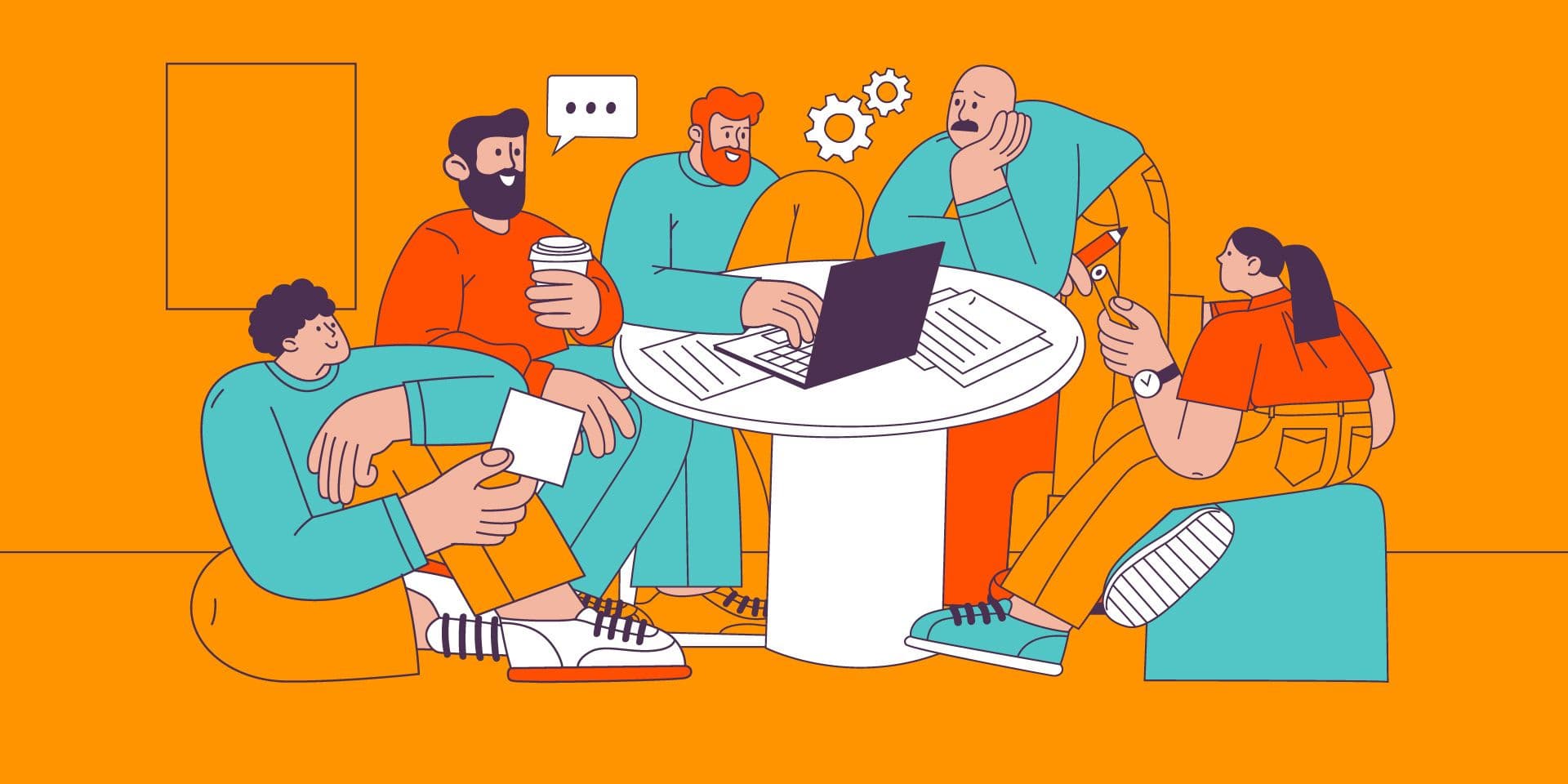
An art direction studio rarely works alone in a strict sense. Depending on the project, it may dialogue with strategists, copywriters, designers, motion designers, photographers, illustrators, developers, and the client's internal teams. Its task is not to replace everyone, but to create common ground where everyone can work better.
- Art Director: Governs the visual language and the consistency of the system.
- Designer: Applies and develops the system on individual outputs.
- Copywriter or Content Designer: Aligns messages and verbal hierarchy.
- Strategist or Marketing Manager: Connects the direction to business objectives.
- Client or Internal Team: Validates priorities, constraints, and the context of use.
Applications: where you see if the direction holds up
A visual direction is measured by its applications. If it only works on presentation boards, it is not yet solid enough. This is why a serious studio tests the direction on real materials.
- Social media templates and editorial content.
- Commercial or institutional presentations.
- Static and motion campaigns.
- Brochures, catalogs, event materials.
What an art direction studio should deliver
The final result depends on the project, but in general, there are certain deliverables that truly make a difference because they help the client use the system over time.
- Clear and shared visual principles.
- Application examples on different touchpoints.
- Rules for images, typography, color, and composition.
- Guidelines for variations, exceptions, and special cases.
- Support or supervision during the initial adoption phases.
Expected results, beyond aesthetics
For many companies, this is the least visible benefit at the start, but the most relevant in the medium term. A well-set visual direction doesn't just make materials prettier: it makes the brand easier to manage, easier to recognize, and more reliable in the eyes of those who encounter it across different channels, at different times, and with different expectations.
When art direction is done well, the results aren't just seen in the beauty of the materials. They are also seen in the reduction of chaos, faster production speeds, higher perceived quality, and the brand's ability to be remembered more clearly.
- Greater visual consistency across materials.
- Increased ease in producing new content.
- Better understanding of visual priorities.
- Perception of greater solidity and professionalism.
Work with a visual direction that remains useful even after delivery
An art direction studio should not just deliver beautiful boards. It should leave a system that the brand can actually use, grow, and adapt over time. Studio Polpo works on visual directions designed to be applied, not just presented: with concrete attention to hierarchy, consistency, legibility, and the real use of content.
- Clear processes, not just aesthetic proposals.
- Real applications, not just abstract concepts.
- Support for brands, campaigns, publishing, and multi-channel communication.
FAQ
How long does an art direction project last?
It depends on the complexity, the number of materials to govern, and the level of analysis required. A lean project can be quick, while more articulated systems require more phases and more testing.
Do I already need to have a defined brand?
Not necessarily. Art direction can intervene both on already structured brands and on projects still in the construction phase, working in dialogue with branding and creative direction.
Does Studio Polpo also handle practical application?
Often, yes. In addition to defining the direction, we can support the application on key materials or supervise the work of the teams that will develop it.