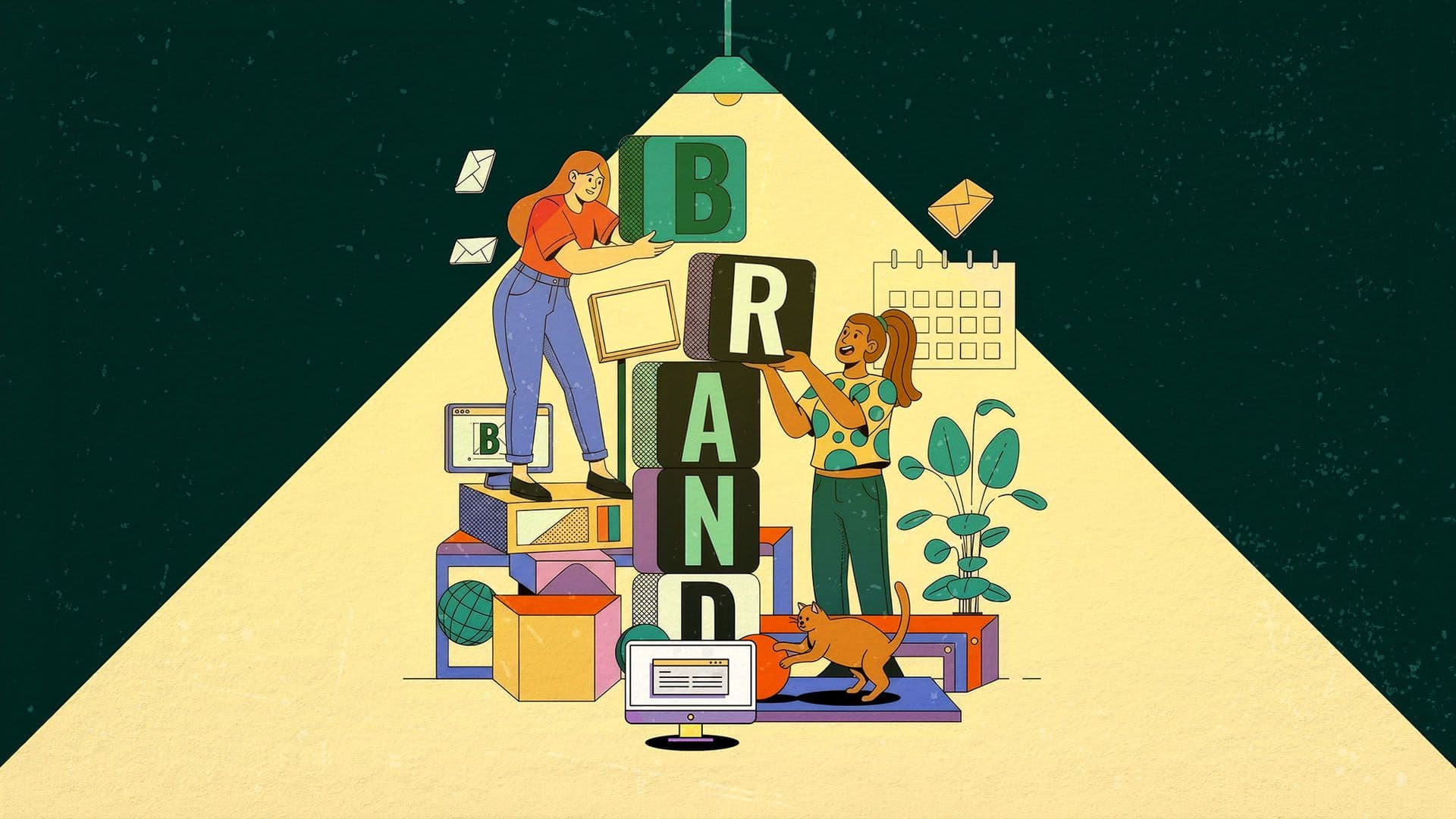
How a branding project is developed: method, phases, timelines, and deliverables
Many companies ask for a branding project when they actually have a much more limited output in mind: a logo, a palette, a final document. In a professional project, however, the visible result is only the final part of a journey that starts with analysis and positioning and arrives at a visual system applicable to real-world touchpoints. Understanding how a branding project develops helps in making better requests, evaluating suppliers more effectively, and above all, obtaining materials that are truly useful for company growth.
As Adobe reminds us, an effective brand strategy is born from the definition of objectives, identity, and the ways in which the brand wants to be perceived. Design comes into play within this architecture, not instead of it.
- A branding project is a process, not a single delivery.
- It works when it connects strategy, visual systems, and applications.
- It becomes truly useful if the final deliverables can be used effectively by those who work on the brand every day.
Phase 1: Analysis and Listening
The first phase serves to understand the context. Without this foundation, even good graphic execution risks resting on weak assumptions.
- Analysis of the company, the offering, and its current stage.
- Mapping of competitors, industry benchmarks, and dominant visual codes.
- Listening to business objectives, targets, and priority touchpoints.
- Evaluation of existing material and its limitations.
In this phase, the contribution of McKinsey & Company is also useful, highlighting how perceived relevance depends on a brand's ability to align messages, content, and experience with people's real needs.
Phase 2: Positioning and Brand Direction
After the analysis, the direction is defined. This is the moment to clarify what the brand must represent, what difference it must make perceptible, and what tone it must adopt.
- Definition of positioning and the value promise.
- Identification of brand attributes and personality.
- Selection of key messages and references useful for guiding the visual language.
- Evaluation of brand architecture, when multiple lines, services, or sub-brands exist.
The brands that generate the most value are those capable of remaining relevant, distinctive, and consistent over time. To get there, a clear direction is needed even before formal execution.
Phase 3: Concept and Visual System
Only at this point does the project enter its most visible phase, where direction translates into form. The risk here is thinking that branding coincides with the trademark. In reality, the trademark is only one part of the system.
- Development of the logo/trademark and its variants.
- Selection or design of the typographic system.
- Definition of the palette and usage criteria.
- Construction of grids, hierarchies, patterns, imagery, and composition rules.
- Alignment with tone of voice, content, and real-world brand uses.
The work of Adobe Certified Professionals offers a good summary of this step: an effective identity is not just made of beautiful elements, but of coherent choices that reinforce each other.
Do you need a branding project that actually works in real touchpoints?
If you are evaluating a branding project, the point isn't just getting a prettier identity. The point is building a system that holds up over time, helps marketing and sales, and can be applied well by those producing materials, content, and assets. Studio Polpo develops branding projects designed to be used, not just presented.
- We start from objectives, audience, and context, not from isolated stylistic choices.
- We build clear, coherent visual systems that are easy to implement.
- We translate the brand into concrete tools for the web, editorial, motion, and communication.
Phase 4: Testing and Applications
A branding project isn't finished when the identity looks convincing on a presentation board. It must be tested in the formats and contexts that truly matter for the company.
- Homepage and service pages.
- Sales presentations and internal templates.
- Social posts, ad campaigns, and digital visuals.
- Brochures, catalogs, editorial materials, and presentations.
- Motion elements, email signatures, icons, and support assets.
From an operational perspective, Nielsen Norman Group also highlights how shared standards and systems improve quality, efficiency, and consistency. A well-designed brand must simplify future work, not complicate it.
Phase 5: Guidelines and Final Deliverables
The final delivery should transform creative work into a brand management tool. This is where the difference between an elegant project and a truly useful project is seen.
- Logo package with formats and variants.
- Palettes, typography, usage rules, and hierarchies.
- Brand guidelines or brand book with application examples.
- Templates for presentations, social media, documents, or recurring materials.
- Assets ready for web, print, and digital channels.
- Indications for rollout (launch) and future management.
When a project is more complex, it can be useful to include aspects of internal governance: who approves, who produces, which touchpoints have priority, and which mistakes should be avoided from the start.
Timeline: How long a branding project actually lasts
The duration depends on several factors: company complexity, the number of touchpoints, the level of analysis required, the presence of a rebranding, the number of decision-makers involved, and the need for additional templates or applications.
- Essential project: Faster timelines, but a more contained scope.
- Medium project: Includes analysis, identity, and main applications.
- Large project: Comprises rebranding, extended guidelines, rollout, and numerous touchpoints.
More than absolute duration, the quality of the process matters: an accelerated but poorly aligned branding project risks producing a fragile system destined to lose coherence very quickly.
Mistakes to avoid when commissioning a branding project
On the client side, there are recurring errors that can weaken the final result.
- Asking for formal solutions without sharing objectives, targets, and real problems.
- Evaluating based only on personal taste rather than system effectiveness.
- Not involving those who will actually have to use the brand.
- Ignoring the role of real applications and templates.
- Considering the project closed without planning for an implementation phase.
Google Search Central also reminds us, in another context, that structure and clarity help people and systems navigate better. The same principle applies to branding: without structure, even good visual intentions are lost.
Build a branding project that remains useful even after delivery
A well-executed branding project isn't just for looking better for a few months. It serves to create a stable foundation for everything that follows: website, materials, campaigns, content, presentations, motion, and daily communication. Studio Polpo works on branding projects designed to last, grow with the company, and make the work of those who use the brand easier over time. We can help you with:
- Branding projects built on analysis, coherence, and applicability.
- Clear, useful deliverables that are easy to implement.
- An approach that connects strategy, design, and the real use of touchpoints.
FAQ
What deliverables should a branding project include?
At a basic level: the logo, palette, typography, usage rules, and an application guide. In more complete projects, there may also be templates, digital assets, and applications for primary touchpoints.
Does a branding project also include the website?
Not necessarily, but it should at least provide testing and indications for applying the identity across the most important web channels.
How much does the analysis phase matter?
It matters a lot, because without context and clear objectives, the risk is obtaining a solution that is formally pleasing but of little use to the business.
What is the difference between brand guidelines and a brand book?
The two terms often overlap. Generally, we speak of "guidelines" when the focus is on usage rules, and a "brand book" when the document also includes narrative, tone, and the logic of the system.