Graphic props for Movies: how to design credible, coherent, and functional assets for storytelling
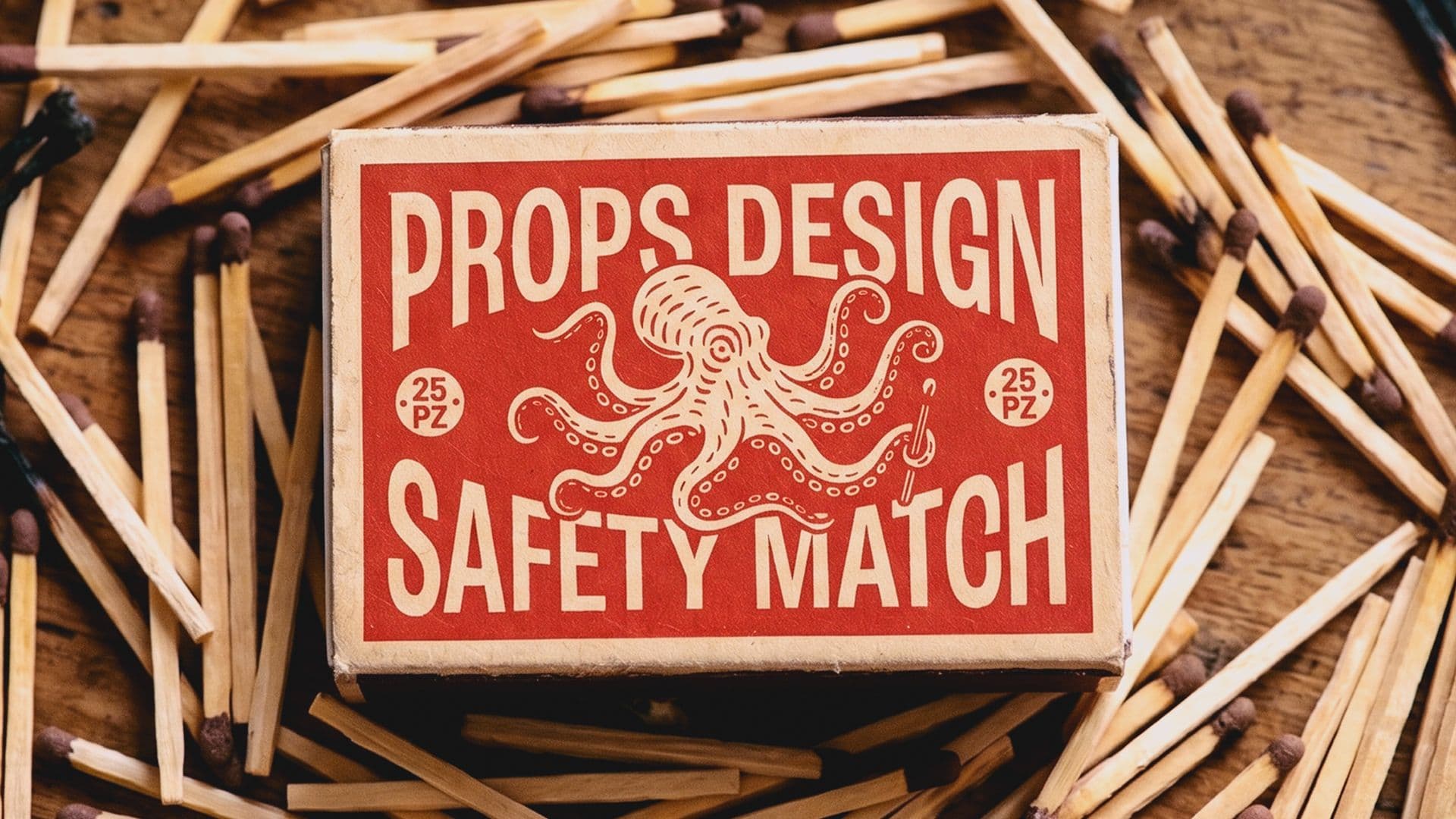
Graphic props for movies encompass all those visual elements designed to live within the frame and interact with actors, production design, and the narrative. It is not just about creating "beautiful" or plausible objects, but about building elements that actually work within the context of the film.
Designing graphic props means working on a delicate balance: they must be credible, consistent with the narrative world, and at the same time legible for the camera. This implies a different design approach compared to traditional graphic design, because every element must respond to narrative, technical, and production needs.
A document, for example, must not only be well-laid out: it must respect formats, languages, and conventions that are plausible for the context in which it is inserted. This also applies to digital interfaces, signage, or editorial materials.
In an article published by Eye on Design, the work on graphic props is described as the construction of “everyday minutiae that lend credibility to the fictional world”, highlighting how even the most marginal elements are fundamental to making the narrative universe coherent and realistic.
The need to work on the credibility of details also emerges clearly in the professional practices of the sector. In a guide dedicated to graphic design applied to the creation of props for cinema, published by Istituto Marangoni, it is emphasized how the quality of graphic props is decisive in maintaining the viewer's immersion, and how inconsistent elements can compromise the overall perception of the film.
How to design credible props
Credibility is the primary objective of scene graphics. A prop works when it appears to belong naturally to the world of the film, without drawing attention to itself.
To achieve this result, the project works on several levels:
- historical and cultural coherence, especially in films set in specific eras;
- functional plausibility objects that look truly usable;
- quality of details, visible especially in close-up shots;
- internal consistency between content, form, and visual language.
In an interview published by It’s Nice That, Annie Atkins emphasizes how working on props requires designing objects that actors can use naturally, because it is precisely this interaction that makes the scene believable. Graphics, therefore, are not just visual: they are also behavioral.
Visual coherence and integration with production design
A graphic prop never exists in isolation. It is part of a broader visual system that includes production design, costumes, cinematography, and art direction.
For this reason, the design must guarantee:
- visual continuity with the scene environment;
- alignment with palettes, materials, and textures;
- consistency with the tone of the film (realistic, stylized, satirical, etc.);
- integration with framing and lighting choices.
Scene graphics must therefore dialogue with other departments. A sign, a screen, or a label are not autonomous elements: they only work if they are perfectly integrated into the overall visual language. This is particularly evident in films where the visual world is highly constructed. In these cases, graphic props also contribute to defining the style and cannot limit themselves to being neutral or generic.
Functionality: designing for the camera
In addition to being credible and coherent, props must be functional for filming. This means designing while taking into account how they will be framed, used, and perceived.
In practice:
- they must be legible at the correct distance;
- they must work both in the foreground and the background;
- they must avoid unnecessary details that create visual confusion;
- they must adapt to the timing of the scene and the pace of the editing.
A frequent error is designing props that are too complex or too "graphic," which work well up close but lose effectiveness on camera. On the contrary, good scene graphics are designed to hold the shot, not just to be observed statically.
Workflow
The design of graphic props often follows a structured process, which helps avoid inconsistencies and improvised solutions.
The main phases are:
- analysis of the narrative and visual context;
- collection of references consistent with the era and environment;
- definition of the graphic language (typography, colors, style);
- design and adaptation based on the needs of the scene;
- verification in relation to filming, printing, or digital use.
This method allows for the construction of a coherent system instead of a sum of isolated elements. If you are working on a film or audiovisual production, approaching graphic props with a design-led mindset from the beginning avoids many problems during filming. Studio Polpo can help you develop solid, integrated, and functional scene graphics.
The most frequent mistakes
Many graphic props turn out weak not because of a lack of technical skills, but because of errors in approach.
Among the most common:
- using generic elements without adaptation;
- ignoring the narrative and historical context;
- designing without considering the camera;
- creating graphics that are too neutral or lacking in identity;
- failing to coordinate with production design and art direction.
In all these cases, the result may look correct but does not "hold" the scene. The problem is not formal quality, but a lack of integration.
Conclusion
Graphic props for Movies are an essential component of visual construction. They do not just serve to fill the space, but to make it credible, coherent, and functional for the narrative.When they are designed with care, they become an active part of the story. When they are neglected, they risk weakening it.
If you want to develop graphic props, scene documents, or visual elements designed to truly work in front of the camera, Studio Polpo can help you build a system that is more coherent, more legible, and more effective.
FAQ
Is scene graphics different from traditional graphic design?
Yes. It must account for storytelling, filming constraints, interaction with actors, and the visual context, not just aesthetics and communication.
Is a specific project always needed for graphic props?
In most cases, yes. Even apparently simple elements require consistency and credibility to function on set.
Should graphic props be realistic or can they be stylized?
It depends on the tone of the film. They can also be stylized, provided they are consistent with the overall visual language.