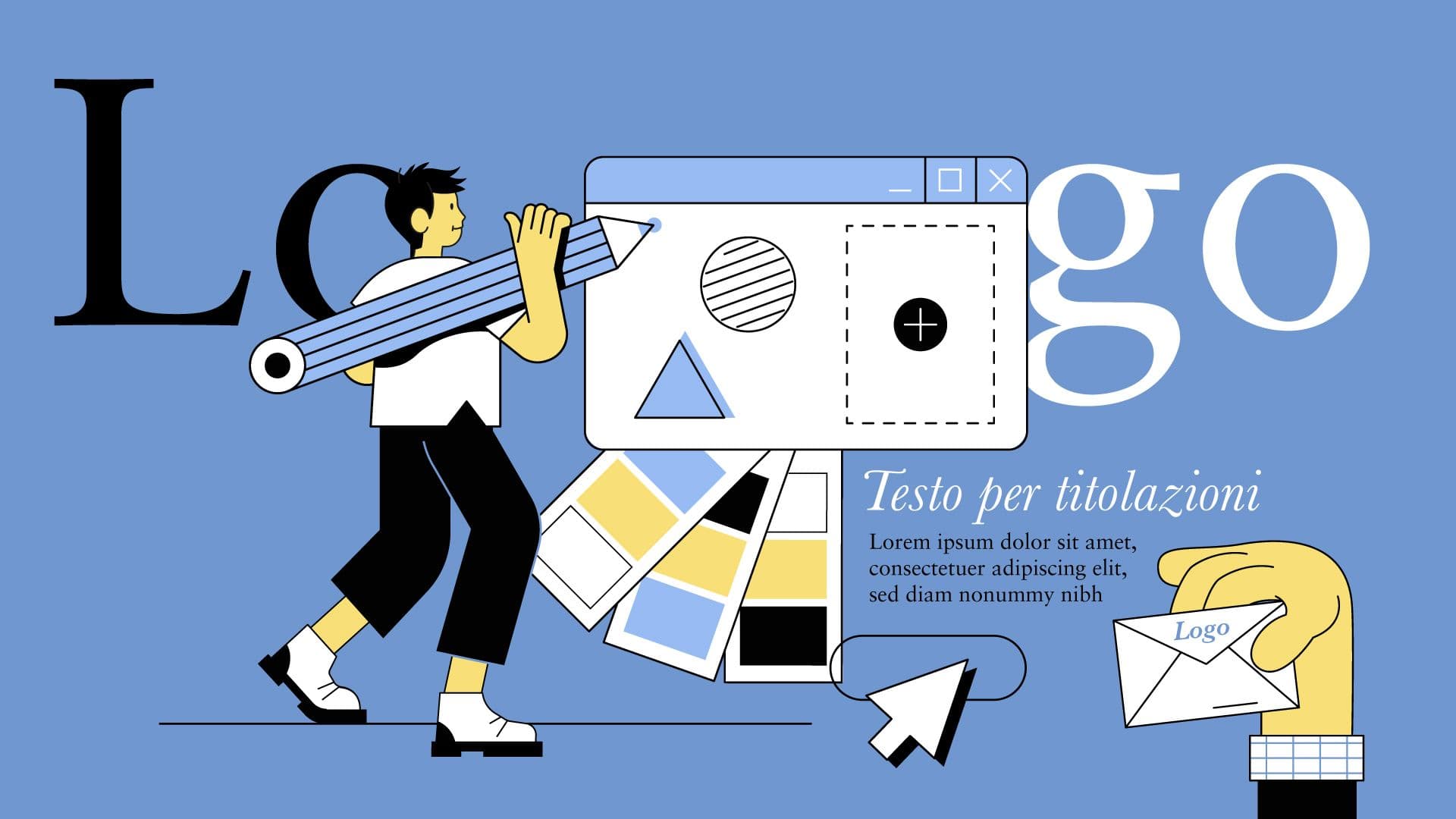
Corporate rebranding: when it is truly needed, which signs to watch for, and what can change
Corporate rebranding is often interpreted too simply: either as an aesthetic change or as a radical operation reserved for companies in crisis. In reality, it is something far more interesting. A serious rebranding effort arises when an organization realizes that the way it presents itself no longer accurately represents its reality, its positioning, or its ambitions.
A useful insight comes from Wolff Olins who, in describing their work for Lloyds, shows how a brand transformation makes sense when it accompanies a broader rethink of the experience, the positioning, and the way the brand lives across all touchpoints. IBM also demonstrates how brand consistency depends on the ability to translate values, products, and communications into a shared system. This is why rebranding is not just about the logo: it is about the way a company makes itself recognizable with greater precision.
When it is truly needed
Not every update is a rebranding. Sometimes a refresh is enough. Other times, a reorganization of the system is required. But there are situations where the existing brand truly stops living up to the project it is supposed to represent. A rebranding becomes truly necessary when:
- the company has changed more than its visual language;
- the positioning has evolved, but external perception has lagged behind;
- the brand no longer holds up well on new touchpoints, products, or audiences;
- growth has amplified inconsistencies that previously seemed marginal;
- the identity system no longer helps internal teams communicate in a clear, consistent, and recognizable way.
In these cases, the problem is not being "tired" of one's image. The problem is that the identity is no longer working in favor of the business, reputation, or clarity.
Signs to watch for
Companies often realize that something isn't working but struggle to give the problem a precise name. For this reason, it is useful to look at certain concrete signs. These are not absolute formulas, but they are very reliable clues.
The most frequent signs are highly inconsistent materials across channels and departments, difficulty in clearly explaining who you have become, a brand perception that feels older than the actual positioning, a logo and identity that perform poorly in digital or moving environments, and new offerings or audiences that the current system cannot support.
When these signs accumulate, rebranding stops being an optional topic. It becomes a necessary step toward clarity.
What can truly change
A good rebranding does not change everything indiscriminately. It changes what is necessary to make the brand more readable, more distinctive, and more consistent with its trajectory. Sometimes this means redesigning the mark. Other times, it means working more on the tone, visual system, typography, motion, messaging architecture, and the consistent use of assets.
It can concretely change the perception of value, the clarity of positioning, the ease of brand adoption by internal teams, the quality of the experience across various touchpoints, and the brand's ability to withstand new contexts and audiences.
The most important point is this: the rebrand must not just look "new." It must make the company more understandable and more credible relative to what it has become.
If you are starting to feel that your brand no longer tells the company’s story well, stopping at just changing a few assets risks producing even more confusion. Studio Polpo can help you understand if you need a refresh or a true rebranding, and above all, define what is actually worth changing.
The most common mistakes
The topic of rebranding is full of misconceptions. The most widespread is thinking that a new logo is enough to change perception. In reality, when serious work on the system and the message is lacking, the brand might look updated but still tell very little.
The most frequent mistakes include changing too much on a formal level without a clear strategic basis, changing too little and leaving underlying inconsistencies intact, failing to involve those who will actually have to use the brand, focusing on the launch rather than long-term adoption, and treating the rebrand as an isolated moment rather than a process.
A rebranding truly succeeds when it builds continuity, not just when it produces an initial spike in attention.
Why it is also an operational matter
There is an often-overlooked aspect: rebranding is not just a symbolic act. It is also a very concrete operational step. A new identity system must be usable, explainable, adoptable, and re-applicable. Otherwise, it remains strong in a presentation but weak in real life.
For this reason, it should be approached as a project that holds vision and application together. The goal is not to "get a makeover." It is to put the brand in a position to better support growth, communication, and reputation.
If you want to understand if your brand truly needs to be rethought and which signs deserve attention, now is the right time to read them with clarity. Studio Polpo works on rebranding and identity systems with an approach that combines strategy, clarity, and real-world use.
FAQ
Are rebranding and restyling the same thing?
No. A restyling is often a more limited update, while a rebranding can touch upon positioning, messaging, the visual system, and overall perception.
Is rebranding only necessary when a company changes radically?
No. Sometimes it is enough that the brand has lagged behind the real evolution of the company.
How much does the logo matter in a rebranding?
It matters, but on its own, it is not enough. Rebranding works when the entire system becomes clear and consistent once again.