Graphic design agency: what it really does and how to choose the right partner for a visual project
The expression graphic design agency is often used generically, as if it were enough on its own to describe a type of service. In reality, behind this formula, there can be very different entities: studios that work primarily on branding, teams focused on publishing or motion, structures more oriented towards commercial communication, or partners that integrate design, content, and strategic support. For a company, therefore, the point is not just finding someone who does graphics. It is understanding what type of partner the project truly needs.
An article by Indeed dedicated to how creative agencies function helpfully explains that these entities can handle visual identity, digital design, printed materials, and marketing communication tools. It is a broad definition, but it serves to clarify a fundamental point: a graphic design agency works where content, image, and communication objectives must meet in a coherent form.
This is why choosing the right partner matters much more than it seems. A visual project does not just need execution. It needs a method, a capacity for synthesis, formal quality, and an understanding of the context in which it will live.
What a graphic design agency really does
A good graphic design agency does not simply produce outputs. It translates a need into a usable, credible, and coherent visual system. Sometimes this means working on a brand identity. Other times, it means building materials for a campaign, an editorial publication, a sales presentation, or a set of digital content.
The key point is that the work does not consist only of drawing well, but of making decisions regarding tone, priorities, hierarchies, and applications. In this sense, design is close to strategy, because it makes choices perceptible that would otherwise remain abstract. 99designs, in a guide on the meaning of visual identity, also emphasizes that design is not a sum of isolated elements, but the process that transforms those signs into a coherent visual identity.
A well-coordinated graphic design agency:
- can design logos, visual identities, and brand systems;
- can develop editorial materials, presentations, brochures, and reports;
- can build campaigns, social media content, advertisements, and digital formats;
- can coordinate visual coherence across different channels, media, and brand moments.
This variety explains why not all graphic design agencies are suitable for all projects. The words are the same, but the actual scope of the work changes significantly.
How to understand which partner you need
Choosing the right partner starts with a simple question: what type of problem do you need to solve? If the issue is the brand's visual positioning, you will need an entity capable of working deeply on identity and systems. If the issue is a publication, a campaign, or a launch, it will be more important to find a studio capable of effectively translating content and goals into concrete forms.
Many collaborations become complicated precisely because this question is not clarified at the beginning. "Graphic work" is requested when a more strategic reflection is actually needed, or broad consultancy is sought when the project primarily requires fast and precise execution.
Clarifying the theme and priorities serves to:
- understand first if the need concerns identity, communication, publishing, campaigns, or a mix of these levels;
- evaluate if the agency shows case studies consistent with the type of project you need to develop;
- understand how they work: for isolated outputs or for systems that remain useful over time;
- verify if they can balance visual quality with operational clarity.
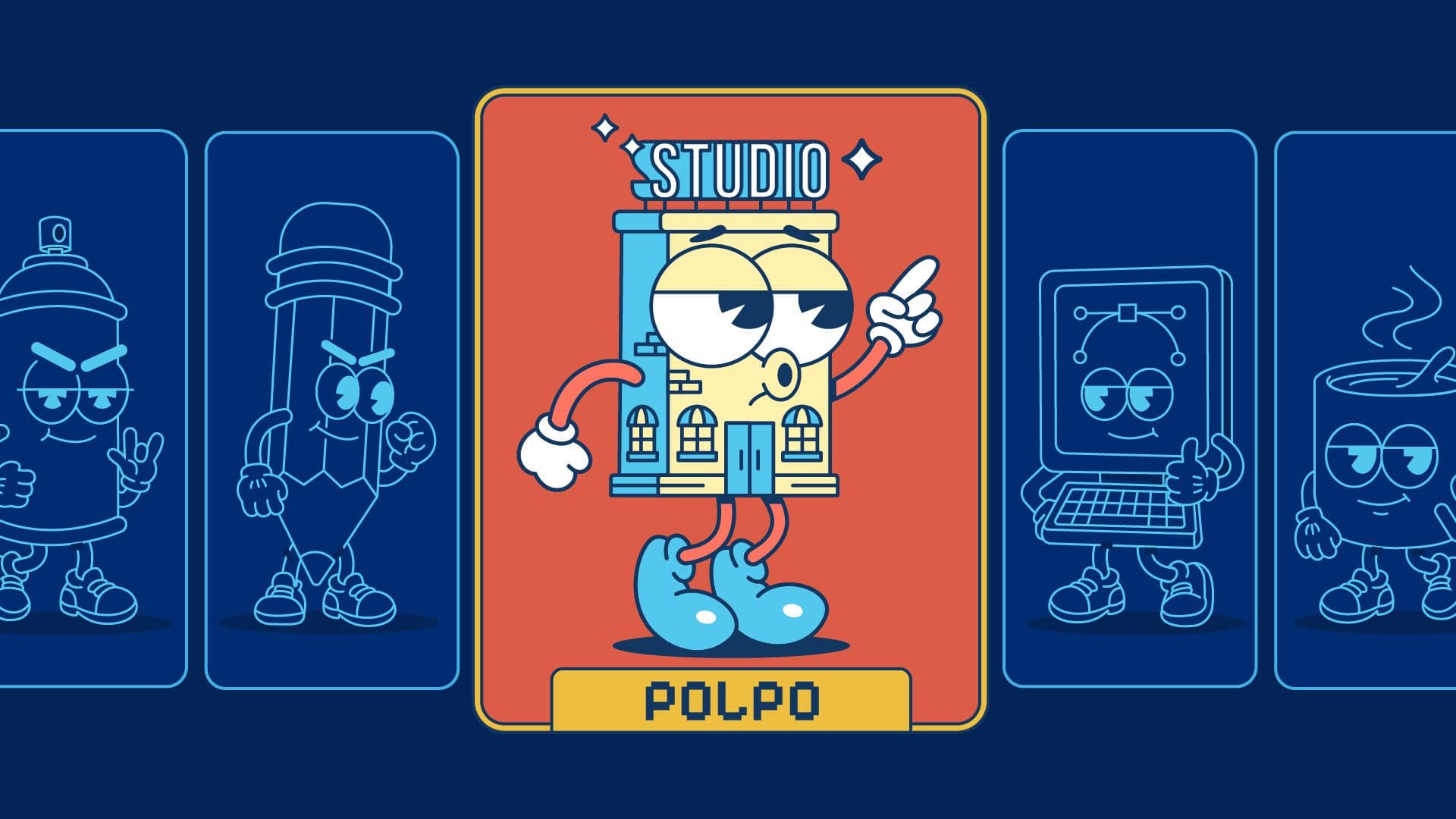
If you are looking for a partner for a visual project and want to avoid generic solutions, stopping for a moment to define the scope of the work can save you time and unnecessary revisions. Studio Polpo can help you precisely in this phase: understanding what type of intervention is needed, which materials truly matter, and how to build a visual system more consistent with your brand, your content, or your communication goal.
What to really look for in your choice
Many clients choose a graphic design agency by looking only at the most impactful portfolio. This is understandable, but it is not enough. A beautiful project can be a good sign, but it doesn't say everything about the ability to work in a way that fits your specific context.
In a guide on collaborating with designers, 99designs observes that work improves significantly when needs, scope, and expectations are clarified with precision before entering execution. This is a very concrete indication: a good partner is measured not only by the final result but also by the quality of the process used to achieve that result.
What a good project partner must have:
- clarity in method and work phases;
- the ability to explain choices, not just show them;
- consistency between the portfolio and the type of project requested;
- attention to the actual performance of materials, not just mockups;
- the skill to build systems that can be used even after delivery.
The most common selection mistakes
When a choice is rushed, one often ends up attributing responsibilities to the partner that do not coincide with their true scope of work. Or, a collaboration begins without having sufficiently defined objectives, priorities, and the actual use of the materials.
Classic mistakes:
- choosing based solely on style, without evaluating method and compatibility;
- asking for a tactical solution to a problem that is actually structural;
- seeking a generalist agency when the project requires very specific expertise;
- not clarifying from the start whether single outputs or a more durable visual system are needed.
In these cases, the risk is not just obtaining a less effective result. It is also wasting budget on a relationship that is poorly aligned with real needs.
Conclusion
A graphic design agency truly works when it does not limit itself to producing materials but helps make the project you have in mind clearer, more coherent, and stronger. For this reason, choosing the right partner is not just about taste. It is about method, the capacity for synthesis, and the quality of the system that will be built.
If you are looking for a studio that knows how to hold together identity, content, and real-world applications, Studio Polpo works on exactly this: transforming diverse needs into visual projects that are more readable, more recognizable, and better suited to how a brand or content must exist in the world.
FAQ
Does a graphic design agency only do branding?
No. It can also work on publishing, campaigns, presentations, digital materials, motion, and broader communication systems.
How do I know if it's the right partner?
By looking not only at style but also at method, case studies similar to your project, and the ability to clearly explain how the work will be developed.
Does specialization or versatility matter more?
It depends on the project. In some cases, very vertical expertise is needed; in others, a partner capable of holding together multiple formats and different needs is required.